
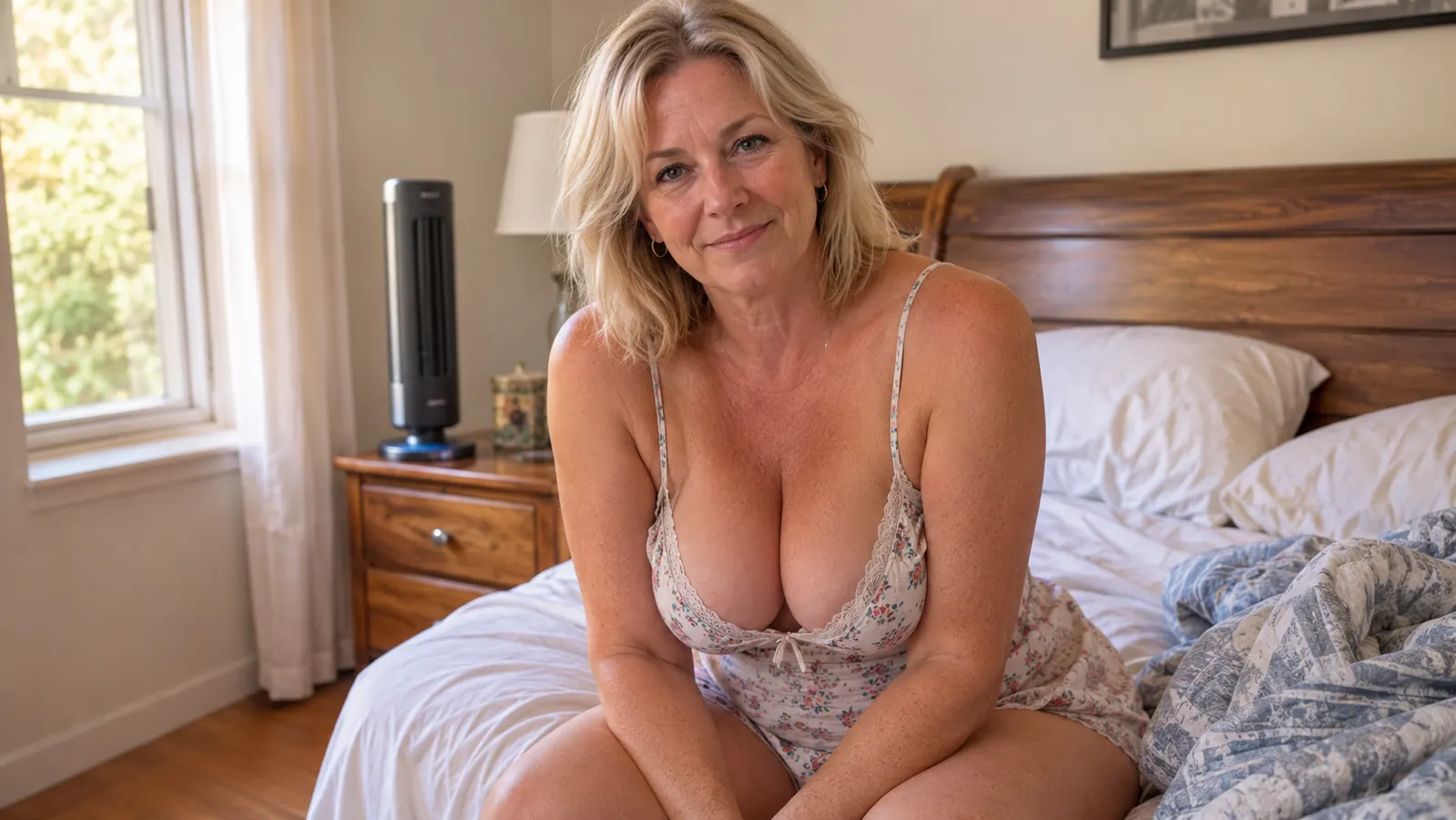
I bought two sets of the NACHILA bamboo viscose pajamas in June, size Medium, and I have worn almost nothing else to bed since. I want to be careful about what that actually means. It does not mean the hot flashes stopped, because they did not, and no pair of pajamas is going to do that. It means the thing against my skin stopped being the reason I woke up at 2:40 in the morning. That is a smaller claim than the packaging makes. It is also the only claim I can make honestly after a few months of sleeping in these.
Here is what nobody tells you before you buy a set marketed as cooling. Fabric is not a refrigerator. Bamboo viscose feels cool when you first put it on, and it lets go of moisture faster than the cotton nightgown I wore for years, but it is still a piece of cloth in a 70-degree bedroom. By four in the morning it is the same temperature as everything else in the bed. What it does well is the hour that matters. That first hour, and the twenty minutes after a flash, when your skin is wet and cotton turns into a damp compress against your back.
The Quick Verdict
Genuinely cooler than cotton when I get in and much faster to dry after a sweat, but the fabric is thin, the top runs long, and the capri hem rides up when I roll over. A real improvement, not a fix.
Amazon Check Today's Price →The set I reach for on the nights I can already tell will be bad
Two sets, size Medium, bought in June and worn nearly every night since. If the shirt you sleep in is the thing you peel off at two in the morning, this is where I would start.
Amazon Check Today's Price on Amazon →How I Ended Up Sleeping in These
For years my sleep setup was a cotton nightgown, a sheet, and a bad attitude. The nightgown was fine in the abstract. The problem was what it did at two in the morning, which was to soak through at the small of my back and then sit there, heavy and cool and clinging, until I got up and peeled it off. I would drop it on the floor, lie back down on the bare sheet, and try to fall asleep again before the next one hit. Greg slept through all of it. He runs warm, he snores, and he keeps the thermostat at 70, which is his answer to everything.
I did not buy the pajamas first. I bought them last, in June, after three other things. The pillowcases came in March because they were the least expensive way to find out whether any of this fabric business was real. The cooling mattress pad came in April, and the double-sided blanket in late May. By June I had a bed that was easier to lie on, a blanket that did not trap heat, and I was still waking up with a wet shirt. That is the point where I stopped treating what I sleep in as an afterthought.
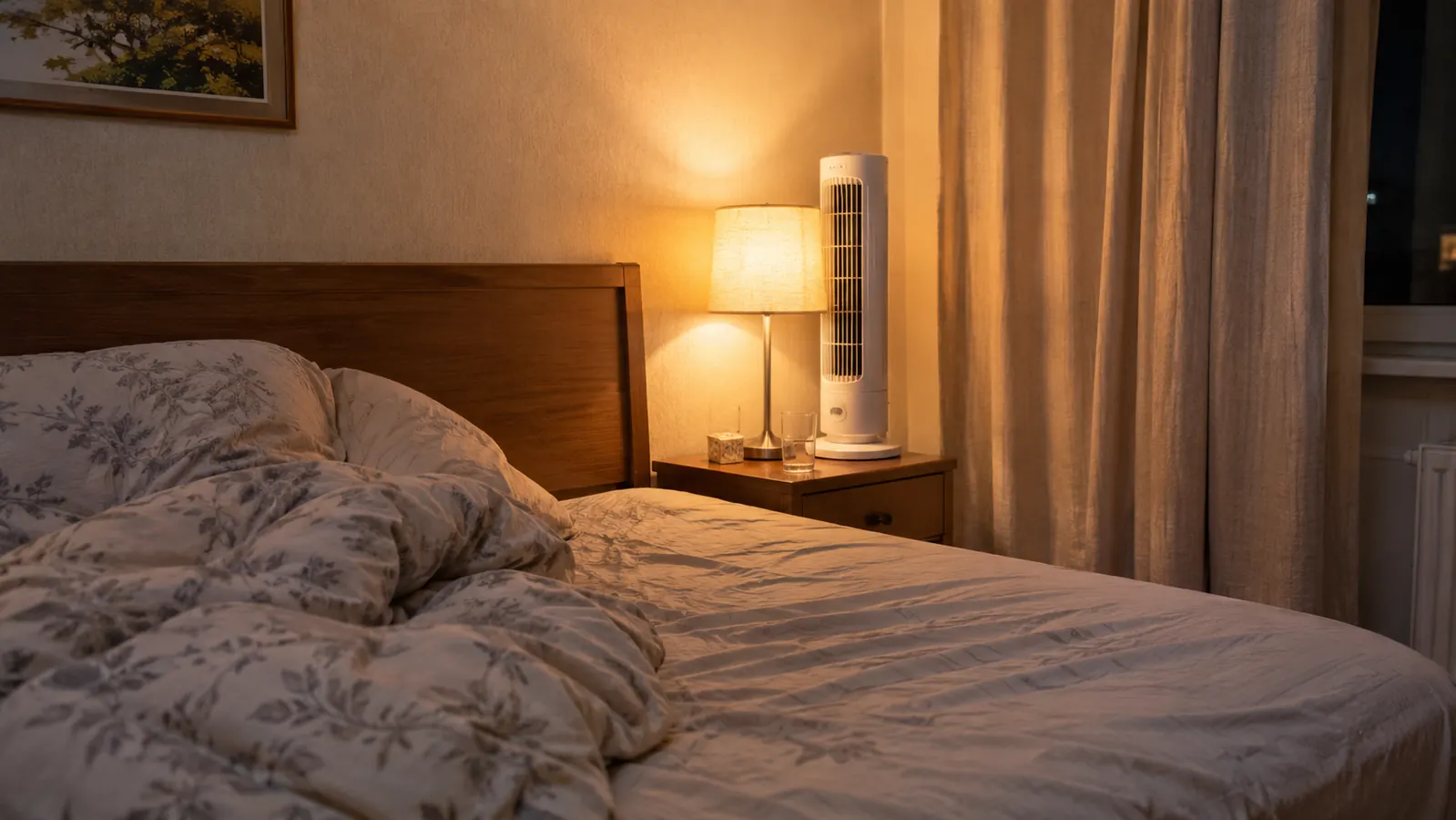
The fan came after, in July, because a hot flash does not care how good your fabric is. It sits on the nightstand pointed at my pillow, set low with the timer when I go to bed, and I keep the remote by my hand for the nights I need it. It moves air across my side of the bed only, so Greg is not lying in a draft, which he would tell me about at length if he were.
I bought two sets of the pajamas, both size Medium, because I had already learned with the blanket that one of anything means you are doing laundry at the worst possible time. One set is on me, one is on the line or in the wash. In three months I have not once gone back to the nightgown, which I take as the real review.
The Fit, Honestly
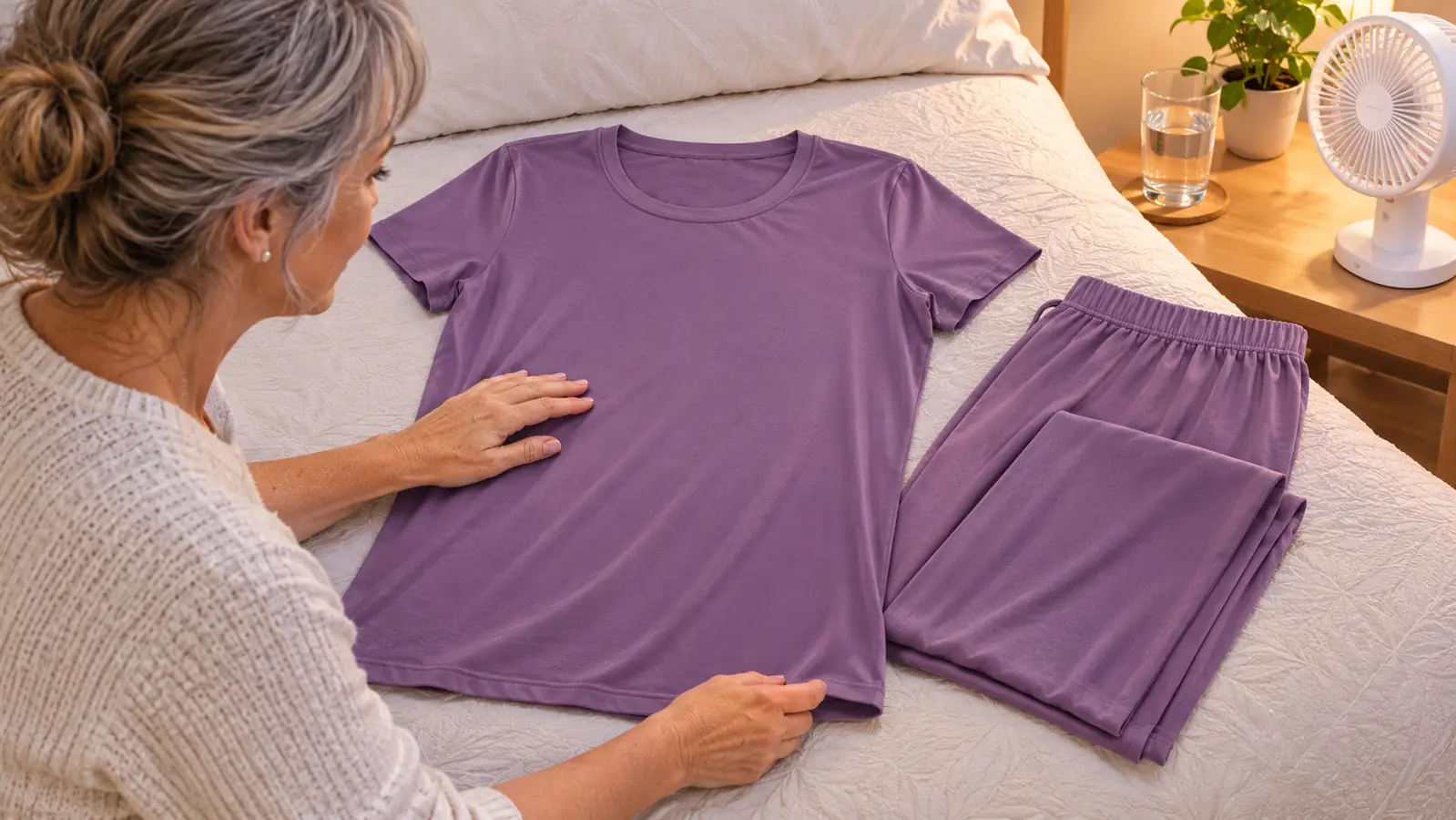
The tops are roomy through the body without being a tent, and the shoulders sit where shoulders are supposed to sit. The crew neck does not gap when I roll onto my side, which sounds like a small thing until you have spent a night with a neckline doing whatever it wants. I am a Medium in everything and a Medium fits here, so I would order your usual size and not get creative about it. If you are genuinely between sizes, go up. The fabric drapes nicely but it does not forgive a tight fit.
The pants are the part I had to get used to. The capri hem lands a few inches below my knee, which is exactly what I wanted for sleeping in a warm upstairs bedroom, but it rides up when I roll onto my side and I am forever tugging it back down in the dark. The rise sits at my natural waist. If you are used to a low-slung pajama bottom, the first night will feel like a great deal of fabric gathered around your middle.
The top runs a little long on me. Tucked in, it bunches at the waistband. Left out, it slides up under the blanket. I solved it by leaving it out, but I am not going to pretend it is cut for a short torso. And to be blunt about the weight of the cloth: this is not a set you answer the door in. It is thin, it is meant to be thin, and thin is most of the reason it works.
The first night I put the set on, I stood in front of the bathroom mirror and seriously considered sending it back. The top hung past my hip bones and the pants gathered at my middle in a way I was not used to after years of a nightgown. I made myself sleep in it once before deciding, which is my rule with anything I buy online, and by morning my mind had changed. What looked like too much fabric standing up turned out to be the reason nothing pulled or twisted while I slept. I have not thought about the length since, and I am a person who thinks about the length of things.
If you are ordering for the first time, order your usual size and give it two nights before you make up your mind. The fabric softens after the first wash, and the set I nearly returned in June is the one I reach for now. The one adjustment I made was at the waist: I fold the band down once before I get into bed, which keeps the hem from riding up as much when I roll onto my side. That is a me-shaped fix rather than a fault in the set, but it is the honest version of how these fit after three months of nights.
How the Fabric Feels at Two in the Morning
The first thing you notice is the cool touch. Bamboo viscose feels cooler against the skin than cotton when you get in, and it holds that through the first stretch of the night, which is often the stretch where I used to lie there with my heart going and the sheet stuck to my back. The second thing you notice is the short sleeve. My old nightgown had sleeves that trapped heat at the back of my neck without ever feeling like they were doing anything. This does not.
The third thing you notice is what happens after a flash, and this is the part a product photograph cannot show you. With the nightgown, the sweat sat in the cloth and the cloth stayed wet. My choice was to lie in it or get up. With the NACHILA set, the fabric lets go of the moisture and dries against my skin, and most nights that means I can stay in bed. Not every night. On a bad one I still get up and change, and if you buy these expecting never to do that again, you will be disappointed by the third week.
Take a night in the middle of July, the sort where the window unit is running and it is still 78 degrees upstairs. I went to bed at 10:40, woke at 1:15 with my back damp, and instead of getting up I rolled onto my other side and lay still. Fifteen minutes later the damp was gone and I was asleep again. With the nightgown, that night would have ended with me standing in the bathroom at half past one holding a wet shirt, wide awake, listening to Greg snore through the wall. In July I got up to change four times in the whole month, and two of those were in the same week when the humidity would not break.
Something I did not expect is that these work better with the blanket than the nightgown ever did. The cooling blanket lives on my side of the bed with the cotton side up on cool nights, and the combination of a layer that does not hold water and a cover that does not hold heat is better than either one on its own. Greg still has his heavier comforter on his half. We have made our peace with that.
One more thing about the top, since it is the piece I notice most. It is loose enough at the armhole that air moves in when I turn over, and that small movement of air is worth more than it sounds at two in the morning. I sleep on the bamboo pillowcases, so when I flip the pillow after a flash, both sides of the equation are dry cloth instead of one damp and one dry.
And they do not stay cool all night, because no fabric stays cool all night. By three or four everything in the bed has come to the same temperature, me included. What the set buys you is the front half of the night and the recovery after a flash, and the difference between dry and damp against your skin. That is worth a great deal to me. It is not the same thing as cool, and I would rather you heard that from me now.
In May I changed my shirt most nights. In July I changed it four times in the whole month. The fabric did not stop the sweat. It stopped the sweat from ending my night.
The Washing Part Nobody Warns You About
Bamboo viscose is not difficult to wash, but it is not careless either. I wash both NACHILA sets on cold with the rest of my delicates and I line dry them, on the porch when the weather is decent and over the stair rail when it is not. On a warm day they are dry in a couple of hours. On a humid Wisconsin day it takes most of the afternoon, which is the entire argument for owning two sets and not one.
I put one set through the dryer on high by accident in June, in a week when everything went sideways. It survived. It came out slightly fuzzier on the surface than the other set and a touch shorter through the leg, and I have not done it again. Tumble low if you must. The line is better and it is not much work.
My routine, since someone always asks. Saturday morning the sheets and pillowcases go in together. The pajama sets go in on cold and then out to the porch rail if the sun is out. In July they are dry before lunch. By October it takes until dinner, and once in November I gave up and finished them over the radiator, which I do not recommend, because that heat does something to the drape that the line does not. The older set has been through the wash about fourteen times now and it has not pilled at the seams or gone thin and see-through the way my old cotton nightgowns did by the end of a summer.
They wrinkle. Pull them out of the wash and leave them in a heap and you will be sleeping in a heap of wrinkles. Shake them out, hang them, and it is fine. The other thing that surprised me is how much water they hold. The set comes out of the machine heavy and dripping in a way the old nightgown never did, and that is the same property that makes it work at two in the morning. The fabric takes up moisture quickly and gives it back quickly, which is exactly what you want when the moisture is coming from you.
What I Liked
- Feels cool against the skin when I get in, and again after a flash
- Dries on my skin instead of sitting wet the way cotton did
- The short sleeve and crew neck keep heat off the back of my neck
- Capri length means my calves are not trapped under the sheet
- Washes cold and line dries without fuss
- Two sets make a rotation that holds up all week
Where It Falls Short
- The fabric is thin, so it is not a set to wear around the house with company
- The top is cut long and bunches at the waist if you tuck it in
- The capri hem rides up when I roll onto my side
- It does not stay cool all night and I still change on the worst nights
- It really takes two sets to work, which is a bigger purchase than one
Who This Is For
You are somewhere in your fifties, your bedroom is the warmest room in the house, and the shirt you sleep in has turned into the thing you fight with at two in the morning. You have already tried a fan and a lighter blanket and they helped, and now you want the layer right against your skin to stop being the problem. You do not mind line drying. You are not looking for a cure, you are looking for a better night and fewer changes of clothes in the dark. That is who these are for, and that is why I ordered the second set within a week of the first.
If that sounds like your bedroom, the order I would do it in is this: one set first, sleep in it a week, then decide. I bought my second one on day six, which tells you what that week was like. It is not a dramatic purchase. It is the sort of thing you notice most on the nights you do not have to think about it.
Who Should Skip It
If you sleep cold, skip these. If you want a pajama with some substance to it, something you could wear downstairs on a January morning with a robe over it, skip these, because they are thin by design and they will feel like almost nothing. If a waistband at your middle bothers you, a one-piece nightgown is the better shape and it is what I wore for years before this. And if what you want is a fabric that stays refrigerated from bedtime to sunrise, nothing does that, and I would rather say so now than have you find out at four in the morning. For anyone still deciding, I also wrote up how the set compares with the cotton nightgown I lived in for a decade, and why two sets beat one.
And if you are the kind of person who wants one set to carry you through the week, buy the second one now and spare yourself the Wednesday night laundry. That is the single piece of advice I would give anyone who asked me about these, and it has nothing to do with the fabric and everything to do with how the week actually goes.
One set tells you whether the fabric works. The second set is what makes it a routine.
I started with one, wore it three nights, and ordered another. If you are on the fence, that is the order I would do it in.
Amazon Check Today's Price on Amazon →