
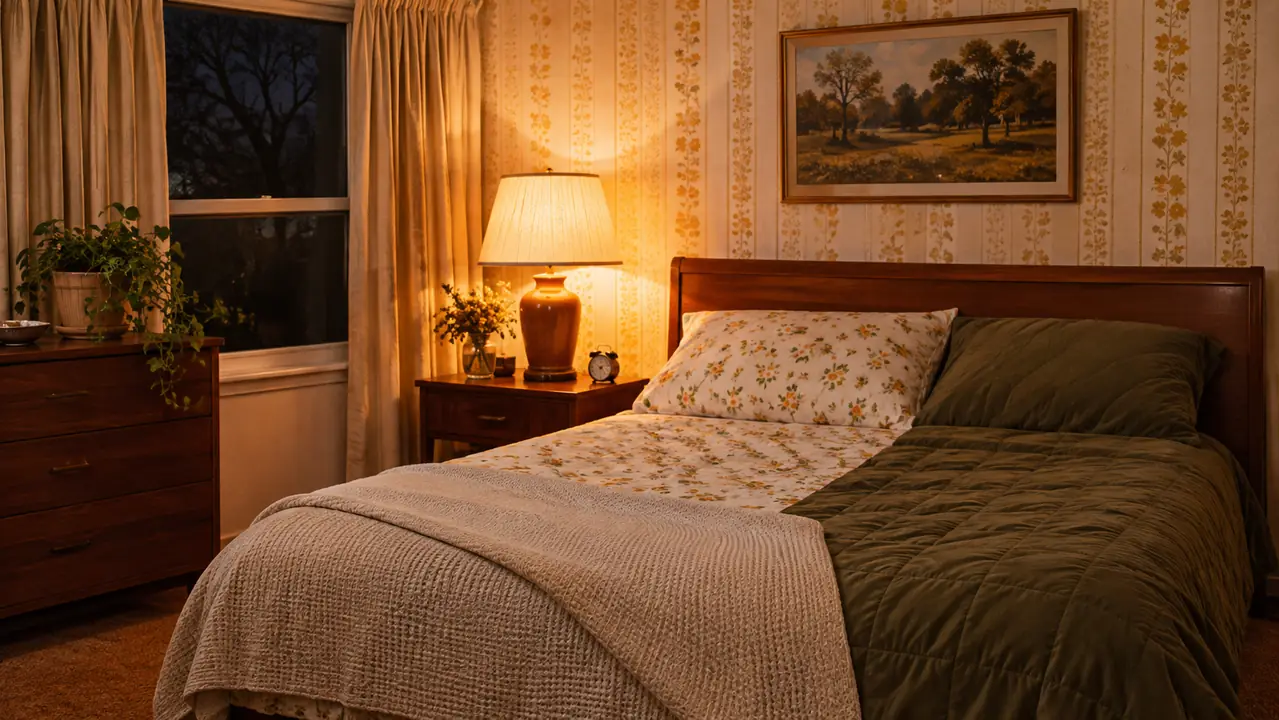
At 2:10 in the morning I wake up because the sheet under my back is damp and Greg is asleep six inches away under a comforter that weighs more than my winter coat. Our bedroom is upstairs in a 1970s split-level outside Kenosha, on the west side of the house, so the afternoon sun soaks into that wall and the room holds the heat until midnight. The thermostat sits at 70 because that is where Greg lives. I am 55, I work day shift as a hospital pharmacy technician, and I have spent five years learning how to sleep next to a man who runs warm in a room that runs warm.
For the first two or three of those years I assumed we had one bed, so we had one blanket. Greg burrowed under his comforter. I shoved it off, woke up chilled around 4 a.m., hauled it back over me, and was sweating again by 5. That loop is what breaks you, not the flash itself. What finally worked was not a colder house or a bigger fan. It was splitting the bed into two temperature zones and putting the Elegear double-sided cooling blanket on my half. I bought the queen size in late May and it has been on my side every night since, while Greg keeps his own comforter on his.
The one piece that made my half of the bed a different climate
A queen-size blanket with cool-touch fabric on one side and cotton on the other, light enough to kick off at 3 a.m. without waking anybody else. If mine vanished tonight, this is the first thing I would replace.
Amazon Check Today's Price on Amazon →Step 1: Split the bedding before you touch the thermostat
The instinct is to drop the thermostat to 66 and call it solved. I tried that for a week. Greg spent three nights in a sweatshirt and I still woke up hot, because the heat I was fighting was coming from the bedding pressed against me, not from the air in the room. Two people under one comforter are voting on the same temperature with two different bodies, and the person who runs hotter always loses, because the only lever is thickness and thickness is exactly what the cold person needs.
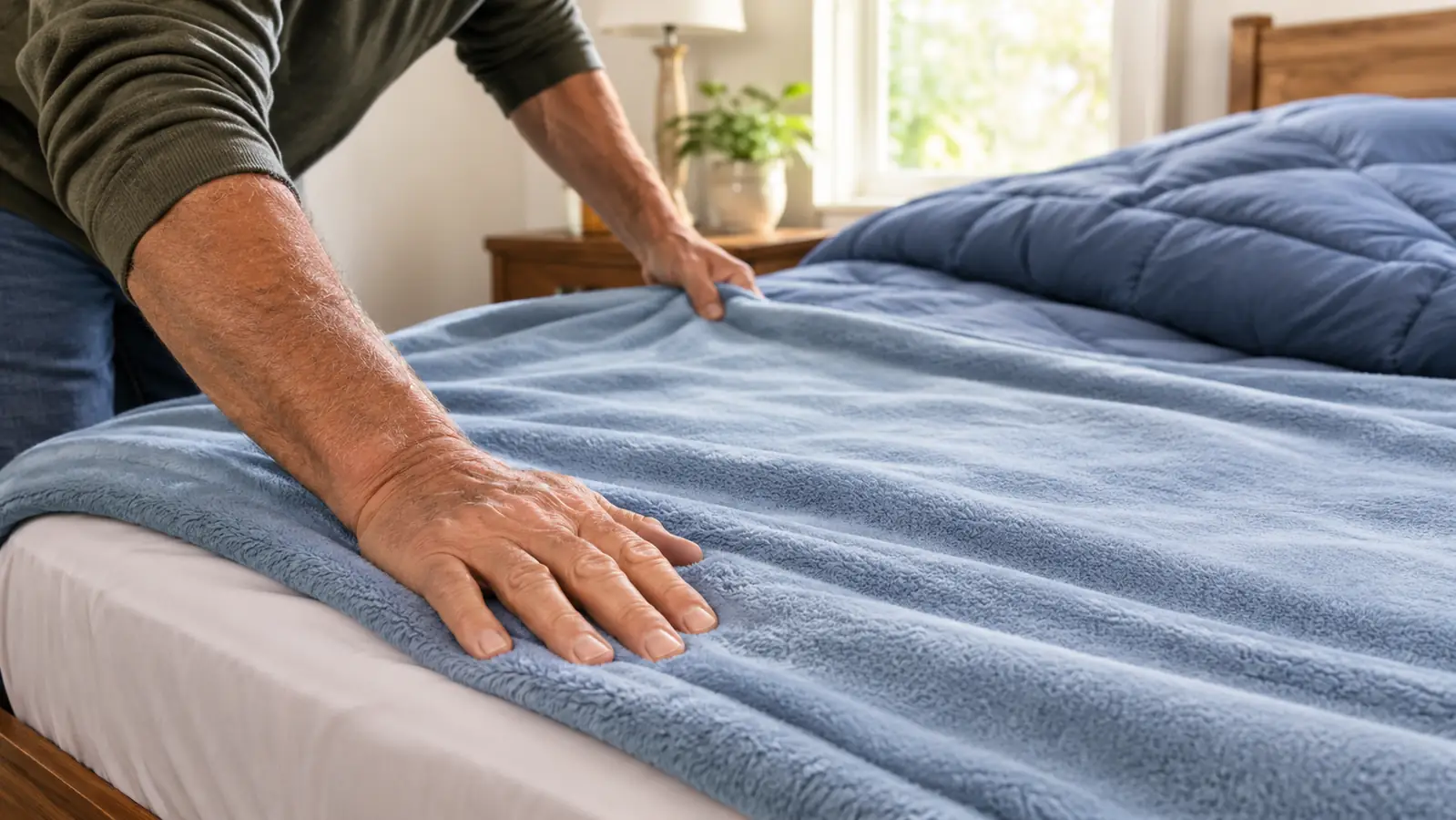
So we stopped sharing. Greg's comforter stays on his half. My Elegear stays on mine, and I make my side of the bed separately from his, which takes about forty seconds. The first two nights felt ridiculous, like a college dorm. The third night I slept until 4:40 without waking, which had not happened in months, and I stopped caring how it looked.
On sizing: a queen blanket on half a queen bed is generous, and generous is what you want. You have enough material to pull over your shoulder, fold the top edge back when you first get in, and still leave fabric hanging on the outside edge. If you both want your own, buy two. If only one of you is the hot one, one split is enough and the other person keeps what they already own. I measured our half once, out of curiosity, and it comes to about thirty inches across. The blanket doubles over easily if I want it to, which sounds excessive until the first cold snap in October, when a doubled layer over my legs is warmer than what Greg is under and still lighter. The first week I kept dragging it too far onto his side and he kept dragging it back. Now it sits with about six inches of overlap down the middle, enough that neither of us ends up with a bare shoulder.
Step 2: Learn both sides of the blanket, and when to turn it over
The Elegear is essentially two blankets sewn together. One side is Arc-Chill 3.0 cooling fabric, which is the side that feels cool to the touch when you first get in and stays that way longer than plain cotton. The other side is cotton. I sleep with the cooling side against me from June through August, then turn it over to the cotton side in September, or on any night when the window air conditioner has been running long enough that the room genuinely drops.
That flip is a five second move and it is why I stopped rotating three blankets through the year. It means the thing is doing two jobs. In July it keeps me from waking up stuck to the sheet. In October it is a light layer over the sheet instead of a comforter. The listing puts the weight at 1,478 grams, so pulling it up over my shoulder does not wake me the rest of the way, and pushing it off takes one arm.
What it is not is a cooling device. It does not stay cold all night and nobody should tell you it does. Around 2 a.m., after a flash, the section against my back has warmed up. I push the blanket off for a minute, let the air reach me, and pull up a section that has not been lying against my skin. Because the fabric does not hold heat the way a quilted comforter does, that takes seconds instead of the ten minutes I used to spend lying there radiating. There was a night in early August, the second week of that long stretch of heat, when the window unit quit around eleven and the upstairs climbed right back up. I slept under the cooling side with the fan on low and woke twice all night instead of the four times I would have counted a year earlier. Greg stayed under his comforter through every bit of it, which I still do not understand. The blanket also picked up a Good Housekeeping bedding award in 2025 and 2026 and sits at 4.4 stars across roughly 30,000 Amazon reviews, which tells you my experience is not a fluke.
Step 3: Change what you wear and what you sleep on first
Before you spend anything on a blanket, fix the layers underneath it. I bought two sets of NACHILA bamboo viscose pajamas in June, the short-sleeve crew top with capri pants, size Medium, and I rotate them. They feel cool when I put them on and they dry faster than the cotton nightgown I wore for years. After a bad night I still sometimes change my shirt. It is just far less often than it used to be, and I am not standing in the closet at 3 a.m. deciding. They get washed on cold and hung over the porch rail, which takes about an hour in July and most of an afternoon by October. Two sets is enough for one person and no more. I tried a third set in a different fabric in June, wore it once, and gave it away within the week because it felt heavier against my back.
The BEDELITE cooling pillowcases came in March, a set of two in viscose from bamboo with an envelope closure, and they were the cheapest thing I tried. I sleep on one, Greg uses the other, and they get washed weekly with the sheets. Flipping the pillow to the dry side after a flash buys me a few minutes, and at 3 a.m. a few minutes is not nothing. The order matters here. If you are in a nightgown that holds moisture and on a pillowcase that does the same, a cooling blanket is fighting your own bedding all night.
The blanket does not stay cold all night. What it does is stop holding my heat against me, and that is the difference between three wakeups and one.
Step 4: Move air across your half, not the whole room
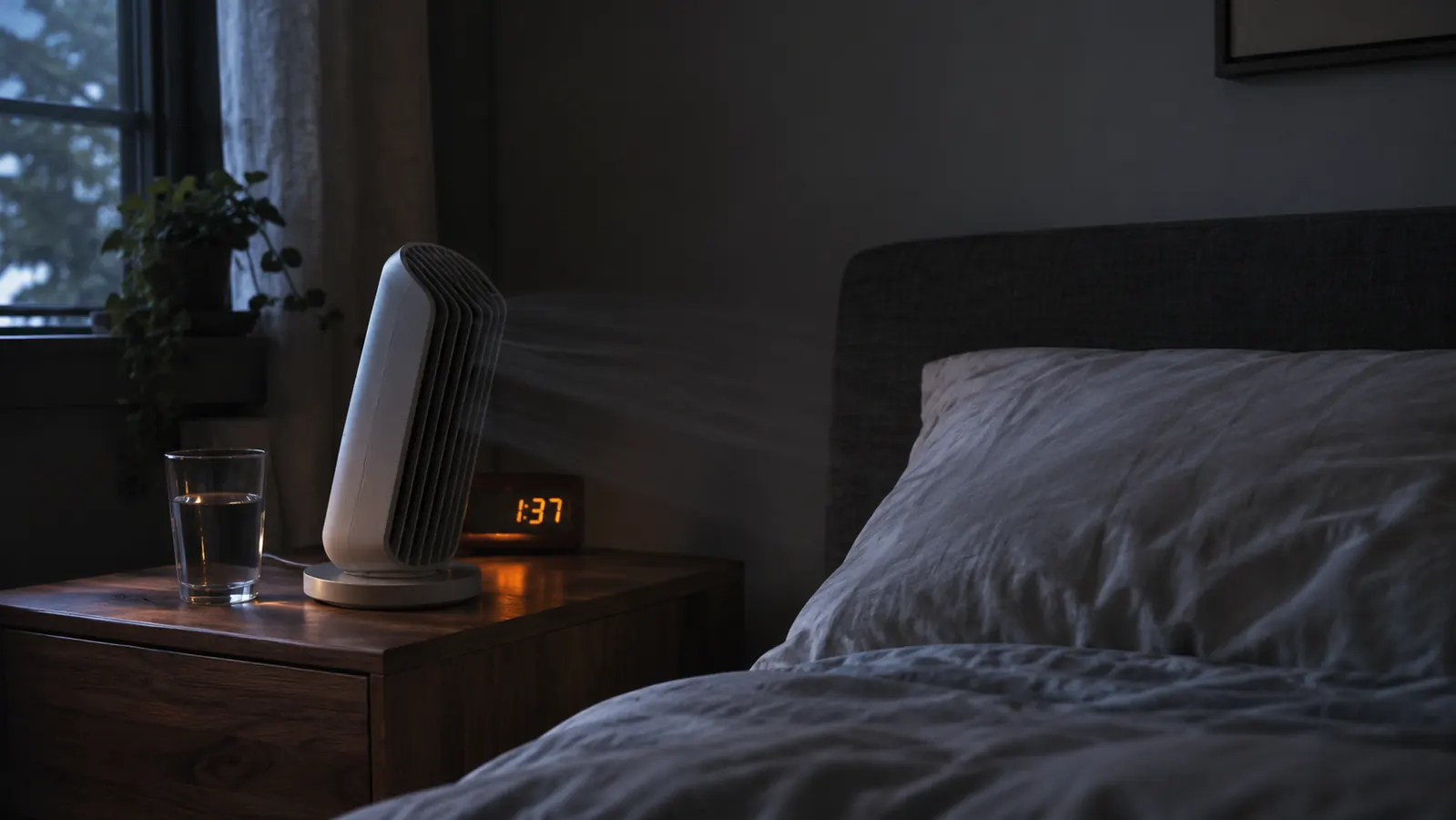
In July I put a Levoit Windi mini tower fan on my nightstand and pointed it at my pillow. It is bladeless, about 13 inches tall, has five speeds, oscillates, and comes with a timer and a remote. On the low settings it is quiet enough that Greg has never once complained about it. I set it low with the timer when I go to bed, and I pick up the remote during a flash instead of lying there deciding whether getting up is worth it.
The important part is the aim. A fan pointed at my pillow moves air across my face and shoulders and does not put Greg in a draft. It does not cool the room and it does not replace the window air conditioner, which still runs on the worst nights in August. What it gives me is a lever I can pull at 2 a.m. that changes my side of the bed without changing the temperature for both of us.
Step 5: Build a 90-second reset so a wakeup does not turn into an hour
Here is my routine, and it is the same every time. Sit up. Push the blanket off. Flip the pillow to the other side. Pull up a section of blanket that has not been against me. Drink the water I leave on the nightstand. Lie back down. No phone, no clock, no walk to the kitchen unless I actually need to change my shirt. The whole thing takes about ninety seconds, and the reason it works is that it is identical every night, so I can do it half asleep without making a single decision. One thing I got wrong at first: I kept the water on Greg's side because that is where the coaster already was, and reaching across him at 2 a.m. defeated the entire purpose. It sits on my nightstand now, next to the fan remote, and both are findable in the dark without turning on a light.
The other half of the reset is underneath the sheet. I bought a MATBEBY cooling mattress pad in April, five months before I am writing this, queen size, quilted, deep pocket, and it stays on the bed year round under the sheets. I wash it every two to three weeks on cold. It is a pad, not a thick topper, so it did not change how firm the mattress feels. What it does is take the edge off the hot, damp spot that used to build under my back and hips by 2 a.m. It does not make the bed cold. Nothing does.
The point of all this is that every step is already in place before the night starts. The fan is aimed. The water is poured. The blanket has a cool section available. When you are half asleep at 2 a.m. you will not invent a plan, so the plan has to be the default. That is the whole trick, and it took me five years to figure out.
What Else Helps
Wash the blanket on cold and air dry it, or tumble it on the lowest heat if you are in a hurry, because a clean blanket feels cooler against the skin and mine gets washed every couple of weeks through the summer. Between the two sides and the light weight, it is the only bedding in the house that has survived a full year without me swapping it out for something else in frustration. It is breathable and skin friendly, and on the nights when Greg has the ceiling fan off because he is cold, it is still the thing keeping my side bearable.
Keep a second set of pillowcases in the closet so a bad night does not mean laundry at dawn. Keep the room as dark as you can stand it, keep water within arm's reach, and keep the line clear in your head: bedding and a fan make the heat easier to sleep through, and that is all they do. If you are soaking through sheets, waking with chills, or the pattern is getting worse instead of better, take that to your doctor. That is a different conversation than the one about blankets, and it deserves a real appointment rather than another Amazon order.
If your half of the bed is the hot half, start there
Queen size, machine washable, cotton on one side and cool-touch fabric on the other. It is not a cure for anything. It is the reason I get back to sleep in minutes instead of an hour, and Greg keeps his comforter.
Amazon Check Today's Price on Amazon →